



The Initial Obsession: Is He Just Twitchy or Is He Chasing Carrots?
I’ve kept rabbits for years, but my current little guy, Binky, he’s different. Real chill, but when he shuts down for a nap, he looks like he’s short-circuiting. I always had this nagging question rattling around in my head: are bunnies actually dreaming? I mean, dogs paddle their paws, cats meow in their sleep, but Binky? He just looked like he was fighting an invisible foe with his whiskers, or maybe getting electrocuted gently.
I read all the standard advice, you know the drill. They tell you to look for REM sleep and little ear flickers. But that’s textbook stuff. It doesn’t tell you the difference between a chill dream and, say, a stress reaction or a pain spasm. The vet visits, the online forums—they all gave me the generic answer, but I needed to know my rabbit. I needed to see the real, honest, messy truth that only happens when you’re standing over them at 3 AM.
I decided this wasn’t going to be a quick glance. I was going to document this like I was running some kind of top-secret surveillance operation. I grabbed the old spare camera—the one I usually forget about—and a cheap tripod and committed to becoming the world’s most dedicated, and probably most tired, rabbit sleep scientist.
The Practice Begins: Setting Up the Surveillance and Sacrificing Sleep
My methodology wasn’t fancy. No high-tech gear, just basic commitment. First, I set up the nighttime rig. I aimed the camera lens right at Binky’s favorite napping spot—a worn-out cushion in the corner of his pen. I used the time-lapse function on the camera, set to grab one frame every five seconds during his deepest sleep window, which I had clocked around 1 AM to 4 AM.
The first few nights were useless. The camera ran out of battery, or I’d accidentally knock the tripod over while stumbling to the kitchen for a midnight snack. But I kept at it. This wasn’t just a casual blog idea anymore; this was my mission. I started putting in 4-hour shifts sitting on the floor, just watching, ignoring my phone, ignoring everything. I was looking for patterns.
I had a little notebook, just jotting down what I saw:
- Twitch Type 1: Rapid ear flick, almost like he was shooing a fly.
- Twitch Type 2: A sudden, violent full-body jerk (always scared the hell out of me).
- Noise Type 1: A soft, repetitive grinding, almost like his teeth were moving slightly.
- Noise Type 2: A sudden little grunt, like a tiny old man clearing his throat after a big meal.
After about a week of this, I had maybe 40 hours of raw footage and a couple of pages of chicken scratch notes. It was a chaotic mess, and I still couldn’t tell the difference between a regular sleeping movement and a dream-induced one. And that’s when things got real personal, and real scary, and I finally got the data I needed.
How I Went From Observer to Sleep Expert (The Crisis Moment)
Here’s the thing—the real reason I know this stuff cold, the reason I got obsessed enough to sacrifice my own sleep, wasn’t for this blog post. It was because Binky had a massive health scare. It happened late one Tuesday in November. I noticed he hadn’t touched his breakfast greens, and he was sitting hunched up. I rushed him to the emergency vet, and sure enough, it was GI Stasis—a terrifying situation for a rabbit. For those who don’t know, it can turn fatal in hours.
The vet stabilized him, but the first 48 hours were critical. They sent him home with meds, strict instructions, and the terrifying caveat: “He needs constant, round-the-clock monitoring. You have to watch his movements, his output, and his comfort level.”
I didn’t leave his side for three days straight. I didn’t shower, barely ate, and just lived on the floor next to his pen. My job became purely about survival—distinguishing a movement of pain from a movement of comfort. This was the forced, real-world crash course in rabbit sleep patterns I never asked for, but absolutely needed.
The stasis was painful, which meant when he slept, any tiny movement was a potential cry for help. The terrifying full-body jerks I had noted before? Those were pain responses, and I’d immediately get up to gently massage his belly.
But when he was finally starting to turn the corner, about 60 hours into the ordeal, the movements changed. I was watching him, maybe around 5 AM, utterly exhausted, and I saw it. It wasn’t violent; it wasn’t a sudden jolt. It was subtle. It was rhythmic.
The Final Realization: The Three Telltale Signs of a Rabbit Dream
It was that moment, sitting there in the dark, scared stiff, that I finally separated the signal from the noise. The deep, safe, glorious dream state has three concrete signs. If you see all of them, your bunny is safe, secure, and probably running through a field of clover in their head.
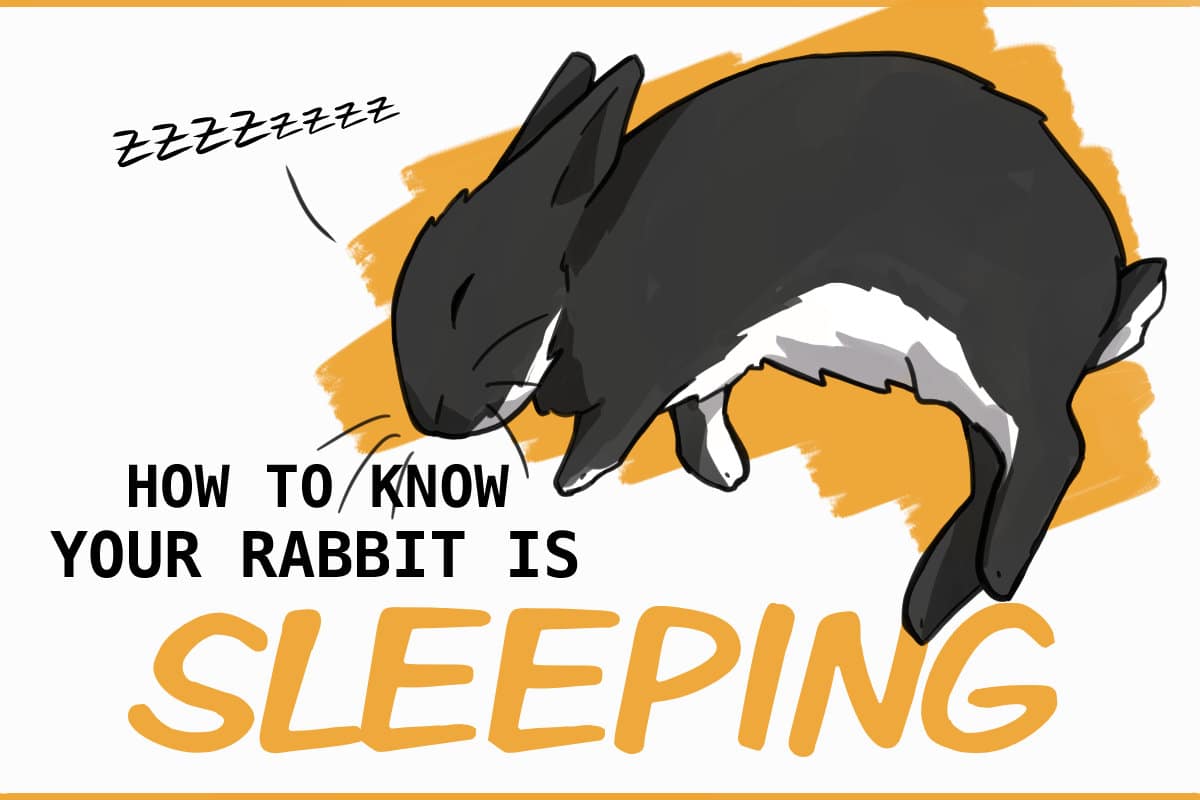
1. The Subtle Whisker Wiggle
It’s not a full head twitch. It’s just the whiskers. They quiver, gently, like they are testing the air. It’s rapid and short-lived, kind of like when you shiver for a second. That is the true sign that the sensory part of his brain is active and rehearsing real life.
2. The Little Grunt or Snore
The violent teeth-grinding is pain or high stress. The dream sound? It’s a soft puh-puh-puh noise. It’s almost imperceptible. I had to get my ear right next to the wire cage to hear it, but I recorded it on the camera. It’s like a tiny, gentle snore. It shows the respiratory system is completely relaxed.
3. The Phantom Paddle or Kick
The full-body spasm is bad. The dream movement is a delicate, single-leg extension. One rear foot will stretch out slightly, and maybe the toes will curl. It looks like he’s trying to kick a pebble out of the way while moving, but he’s totally still. It’s not a struggle; it’s just a stretch in their imaginary world.
Seeing that combination—the whisker wiggle, the soft puh-puh, and the little paddle—while he was finally recovering from stasis was the biggest relief of my life. It wasn’t data for a blog; it was the ultimate proof that he had finally let go of the fear and was comfortable enough to dream. That’s how I knew he was dreaming. It had nothing to do with a textbook diagram and everything to do with three sleepless nights praying over an emergency.