




Man, I always just thought dreams were, like, just brain farts. Random junk your head cooks up when you’re zonked out. You know, a mix of what you ate, what you watched, whatever. Never really paid ’em much mind, just woke up, yawned, and went about my day.
But then, a couple years back, something shifted. I kept having these weird, vivid dreams. Not nightmares, just… intense. Like one where I was trying to herd a bunch of wild horses through a burning field, or another where I was in a giant library made of glass, and all the books were empty. They just stuck with me, lingered all day. And I started thinking, there’s gotta be more to this, right?
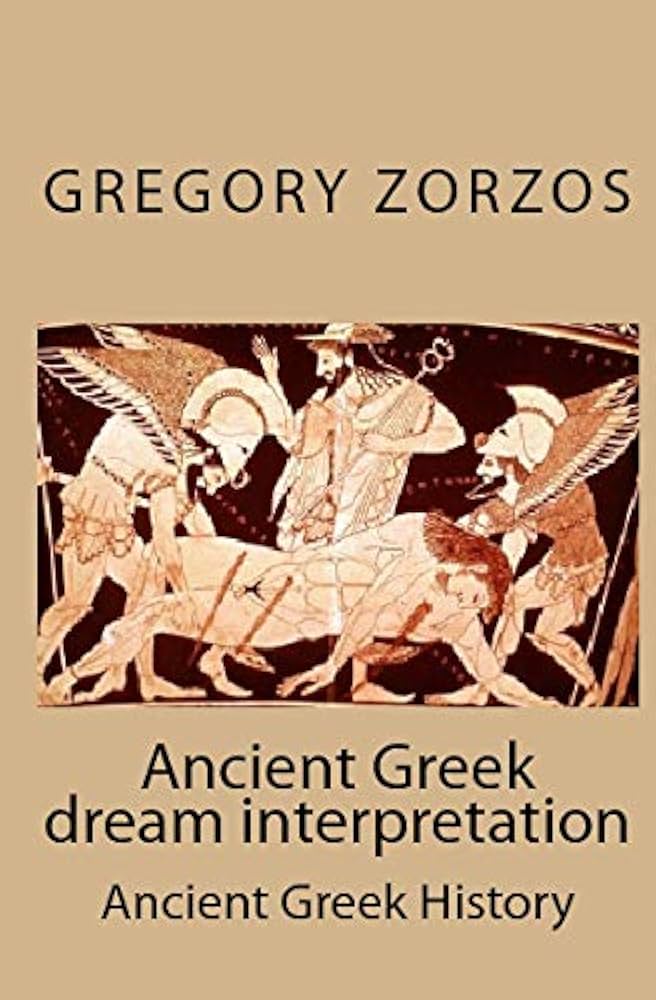
I was just poking around online, you know, late at night, probably with a beer. Just searching for “dream meanings” or whatever. And I stumbled onto some stuff about how the Ancient Greeks saw dreams. Not just as random fluff, but as actual messages. Like, serious business. Messages from the gods, or from your own soul, even a peek into the future. That really grabbed me. It wasn’t just some flaky New Age stuff; these were, like, ancient thinkers taking it seriously. So I figured, why not try to understand my own dreams through that lens?
Getting Started: My Dream Journal & First Steps
First thing I did, I bought a cheap notebook. Nothing fancy, just a plain, lined one. That became my dream journal. Every single morning, the instant I woke up, before I even got outta bed, I’d grab it and just start writing. Everything I could remember. No matter how fragmented, how silly, how wild. Just scribble it all down. Details were key, I learned. The colors, the feelings, who was there, what was said, the whole nine yards.
Then, after I’d written it all down, usually while having my coffee, I’d sit with it. This was the part where I tried to put on my ‘Ancient Greek dream interpreter’ hat. Now, I’m no scholar, right? I just read some basic stuff, mostly articles, sometimes old book excerpts I’d find online about oneirocritica – that’s what they called dream interpretation back then. It wasn’t about finding a direct “dream dictionary” meaning like ‘dream of a cat means X’. Nah, it was deeper than that.
The Greeks looked for symbols, sure, but also the overall vibe, the narrative, and how it connected to your waking life. They’d consider elements like:
- Who appeared? Was it an animal, a god, a friend, a stranger? Each could carry a specific significance.
- What was the setting? A temple, a battlefield, a forest, the sea? The location often had a symbolic weight.
- What were the actions? Flying, fighting, building, running? What you did in the dream mattered a lot.
- The emotional tone: Fear, joy, confusion, peace? The feelings were crucial clues.
I really focused on trying to tie it back to my life. Not literally, but symbolically. Like, if I dreamt of a raven, it wasn’t just a bird. Could it be a messenger? A sign of darkness or something hidden? Depending on the context of the dream, and what was going on in my own life.
My Own Dream Experiments: Learning by Doing
I remember one dream really threw me for a loop early on. I dreamt I was in a grand theater, but there was no audience, and I was the only actor on stage. I was trying to deliver lines, but no sound came out, just a whisper. Woke up feeling totally lost and frustrated. My initial thought was just ‘bad dream.’ But then I went to my journal. Theater, stage, no audience, no voice. The Greeks would’ve seen that as a message, surely.
I mulled over it for a few days. Theater, performance, being seen. But also, no audience, no voice, feeling unheard. And it dawned on me: I was having a major issue at work where I felt completely ignored, like my ideas weren’t being heard, even though I was trying my best. It was like the dream was literally showing me my waking situation, but amplified, giving it this almost divine-like weight. It wasn’t some literal prediction, but a clear, powerful metaphor for my current struggle. That was a big ‘aha!’ moment for me.
Another time, I dreamt I was climbing a huge, really slippery mountain, and at the top, there was a single, tiny, withered olive tree. I was struggling, almost falling, but I finally made it. The olive tree! That immediately made me think of Athena, peace, wisdom, victory. But it was withered. So, a struggle for wisdom or peace, maybe? And that it was a huge effort to get there. Turns out, I was really struggling with a tough decision, weighing pros and cons, trying to make the ‘wise’ choice, and it felt like an uphill battle. The dream wasn’t saying “do X,” but it was acknowledging the struggle and the value of what I was trying to achieve, even if it felt small or difficult to grasp.
The Impact: More Than Just Sleep Stories
It wasn’t always easy, mind you. Sometimes I’d have dreams about, like, eating a really big sandwich, and I’d be scratching my head, trying to figure out if that was a divine message about my diet or just, you know, a big sandwich. You kinda gotta learn to filter out the noise. Not every dream is a deep revelation. But the process itself, of reflecting, of looking for deeper meaning beyond the surface, it really changed how I view my dreams. And honestly, it changed how I look at my waking life too.
It’s like my subconscious is talking to me, sometimes yelling, sometimes whispering. And by trying to understand it through that old-school Greek lens, it’s given me a way to listen. It made me feel more connected to myself, more aware of what’s bubbling underneath the surface. It’s not just about interpreting dreams anymore; it’s about understanding myself a little better, one strange, vivid sleep story at a time. It’s been a wild ride, and I’m still just stumbling along, learning something new almost every week.